December 10, 2025
The potential of new TB vaccines offers hope at the Union Conference in a year of crisis
The global TB community reaffirmed its commitment to develop and deliver accessible new TB vaccines
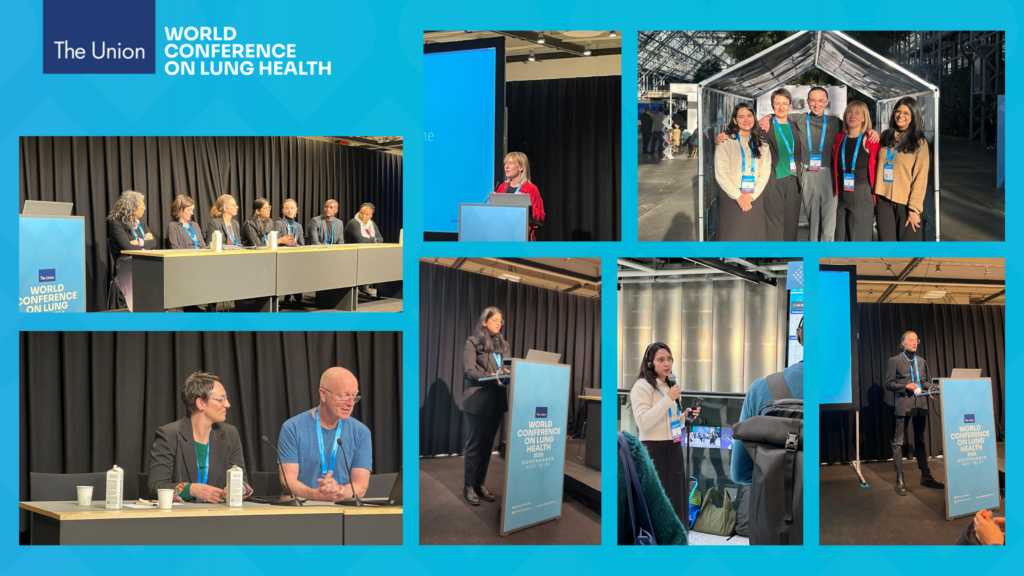
Amid a turbulent year for global health, the tuberculosis (TB) community came together for the World Union Conference on Lung Health 2025 in Copenhagen, Denmark from 18-21 November. This year’s convening was buoyed by the solidarity and resilience of a community unwavering in its commitment to end TB in the face of devastating funding cuts. Drastic policy shifts from the U.S. government and major European donors continue to jeopardize TB services and research around the world, threatening the post-COVID-19 pandemic recovery. In 2024, 10.7 million fell ill with TB, a small (1%) reduction from 10.8 million in 2023.
Across the conference, attendees took stock of the impact and tangible opportunities to sustainably end TB, including new vaccines. Funders and civil society proposed practical strategies to ensure new tools progress through clinical trials toward equitable access by leveraging regional leadership and novel financing approaches.
The momentum around new TB vaccines, the first of which could be available this decade, has never been greater. At least 16 candidates are in the clinical pipeline, with more in preclinical development. This year, the Phase 3 trial of the M72/AS01E candidate completed enrollment 11 months early in April, and in February the MBTVAC candidate, developed by the Spanish biopharmaceutical company Biofabri, entered the IAVI-sponsored Phase 2b IMAGINE trial in adolescents and adults in South Africa, Kenya, and Tanzania.
This year’s Union featured more than 20 sessions showcasing the latest on TB vaccines, from innovations in clinical development to growing implementation and advocacy initiatives. Here are some key takeaways.
Optimizing clinical development
An IAVI-coordinated session underscored the importance of global partnerships in advancing late-stage development, underpinned by networks of local, multidisciplinary experts. Pivotal trials, like the Phase 3 M72/AS01E trial, are already yielding valuable lessons for other late-stage trials. Epidemiological research across the full vaccine development pathway is crucial to this effort, including in sub-national high burden settings, to enable data-driven decision making. Context-specific community engagement strategies are likewise vital to meet the needs and realities of communities. Elsewhere, greater visibility and utility of existing clinical trial assets was highlighted as a low cost-high impact way to improve efficiency across TB research more broadly.
Experts also discussed how our evolving understanding of TB disease trajectories, which are complex and non-linear with heterogeneous disease phenotypes between populations, may inform clinical trial design. For example, evaluating the prevention of asymptomatic TB (aTB) could aid vaccine development by providing a composite endpoint. More evidence is now needed to standardize the symptom threshold for aTB and elucidate how efficacy may differ between clinical disease and aTB. Current diagnostics however have limited ability to capture this complexity. Improved biomarkers, assays, and diagnostic strategies are urgently needed to understand vaccine-induced immunity and facilitate the identification of correlates of protection and correlates of risk of disease progression.
Preparing for introduction
Preparatory efforts for TB vaccine rollout are advancing, notably under the WHO’s TB Vaccine Accelerator Council with partners including Gavi and the South African government. Presenters shared insights from recent reports mapping solutions for equitable global access and sustainable financing and global– and country-level scenario planning and policy priorities. Greater clarity of financing needs and capacities, local manufacturing capabilities, and the efficacy of future vaccines remain essential to formulate concrete plans. Mathematical modeling using adaptive, geographic, and risk-based approaches continues to generate key evidence to support decision making. Crucial insights are also being gained from ongoing implementation research of community drivers of uptake, alongside work to scope community interventions.
“A few years ago, vaccines weren’t even on the agenda of most TB meetings, but the reality today is positive.” said Tereza Kasaeva, director, WHO department on HIV, TB, hepatitis, and STIs. “We only have five years to reach the End TB targets. We need to maximize our efforts, and many countries are progressing in impressive ways with strong partnerships accelerating efforts.”
Beyond vaccines, attendees reiterated calls for integrated service delivery to address multiple health challenges, including through multi-disease testing. In this vein, TB vaccines are expected to complement existing and emerging interventions, including nutritional support, TB preventive therapy, and long acting antimycobacterials. Speakers considered operational and ethical implications of other prevention tools for TB vaccine development, noting that multidisciplinary studies are needed to better understand their combined impact.
Advocating for inclusive research and policy impact
With civic space shrinking, delegates amplified calls to preserve civil society engagement in the TB response, including as an accountability mechanism. Prioritizing inclusive research to generate the evidence needed to ensure timely, universal access to TB vaccines was a central theme. Discussions on the optimal inclusion of pregnant and lactating women in TB research were of particular interest following the WHO’s recently published consensus statement. Building on last year’s community consensus, the WHO statement includes a recommendation for comprehensive plans to generate adequate evidence for pregnant and lactating women during TB vaccine development, with their exclusion clearly justified. Dedicated investments are now needed pre-licensure to support comprehensive community and civil society engagement to ensure the right to new TB vaccines for all.
“Civil society and communities can influence national prioritization and budgeting, as well as global funding initiatives, by following the money and mobilising it,” said Peter Owiti, Gavi CSO Constituency Steering Committee and WGNV Core Group member.