April 1, 2026
IAVI announces the onset of first-in-human Phase 1 clinical trial of broadly neutralizing antibodies (bnAbs) to prevent HIV transmission
The trial, run by the HIV Vaccines Trial Network (HVTN) and HIV Prevention Trials Network (HPTN), will evaluate the safety, dosing, pharmacokinetics, and ability of four bnAbs to neutralize HIV
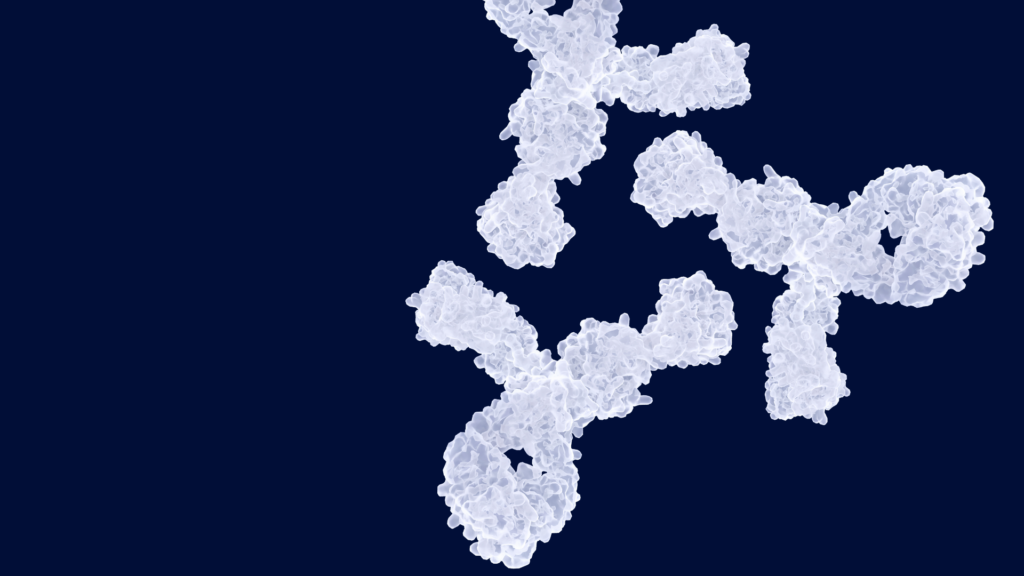
IAVI is pleased to announce the use of its broadly neutralizing antibody (bnAb), ePGT121v1-LS, in a first-in-human, Phase 1 clinical trial that began on March 19, 2026. IAVI’s HIV bnAbs program is designed to develop efficacious antibodies that can prevent HIV transmission. The program is specifically geared for eventual use to prevent HIV transmission to infants during the post-natal period. With 120,000 children newly acquiring HIV in 2024 alone, and 50 percent of infant HIV acquisition taking place in the breastfeeding period, there is a clear need for additional prevention tools developed to protect this vulnerable population. The onset of this clinical trial is a significant step in examining whether a combination of broadly neutralizing antibodies could be this new tool. With robust safety and dose data collected through this study, which has only adult participants, IAVI’s team will have the necessary data to plan future studies in infants.
This clinical trial, HVTN 141/HPTN105, will use four antibodies that target different HIV receptors. Based on past studies, the antibodies together are expected to neutralize more strains of HIV than any antibody alone. IAVI’s antibody will be given by itself and together with two of the three additional antibodies, VRC07-523LS and PGDM1400LS. The fourth antibody, PGT121.414.LS, will be given by itself and in combination with these same two antibodies. Doses will be delivered by IV, under the skin, and via intramuscular injection. This will allow for the study to examine the safety of the antibodies; dose; pharmacokinetics of the antibodies, which will allow investigators to see how long the antibodies last in the blood; and measurement of how effectively the antibodies neutralize HIV (serum neutralizing activity).
The study, which is sponsored by the Division of AIDS, National Institutes of Allery and Infectious Diseases (DAIDS) will enroll 118 adult participants without HIV in three groups. Group A will receive antibodies through intravenous infusion, and participants will be split further into groups to receive doses of either IAVI’s antibody independently or in combination with the other two antibodies. Group B will also be split to receive either IAVI’s antibody in isolation or in combination but will receive doses through injections just under the skin. Group C will receive the antibodies intramuscularly.
ePGT121v1-LS is an engineered version of the antibody PGT121 which was isolated by IAVI and partners from blood samples taken from IAVI’s Protocol G. Protocol G was a cohort study run by IAVI that collected samples from HIV positive adult participants in Uganda, Zambia, Rwanda, Kenya, Nigeria, Cote d’Ivoire, South Africa, India, Thailand, Australia, the U.K., and the U.S. The engineering of PGT121 to create ePGT121v1-LS was conducted by IAVI and our partner, Scripps Research. This antibody was selected for further development following evidence of strong potency in pre-clinical trials.
The study is due to take place across ten sites in the U.S. and Peru. The sites in the U.S. include: Alabama CRS, in Birmingham, AL; Bridge HIV CRS in San Francisco, CA; George Washington University CRS in Washington D.C., the Ponce de Leon Center CRS in Atlanta, GA; Brigham and Women’s Hospital CRS in Boston, MA; Penn Prevention CRS in Philadelphia PA; Vanderbilt Vaccine CRS in Nashville TN; and the Houston Advancing Research Team CRS in Houston TX. Research will also be conducted at two clinical trial sites in Peru: Via Libre CRS in Lima Cercado and Centro de Investigaciones Tecnológicas, Biomédicas y Medioambientales CRS (CITBM) in Bellavista, Provincia Constitucional del Callao, Peru.