May 18, 2026
HIV Vaccine Awareness Day 2026: African research leading the charge
Celebrating the launch of landmark clinical trials IAVI G004, IAVI C114, and BRILLIANT 011.
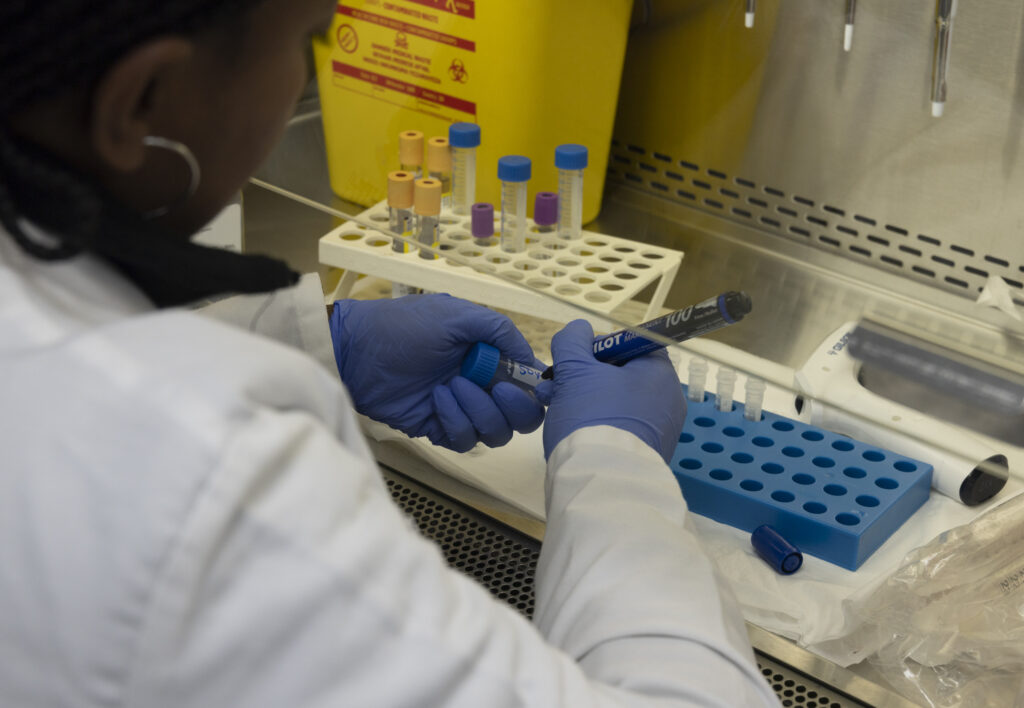
May 18 marks HIV Vaccine Awareness Day (HVAD) in recognition of the tireless search for a tool that could help end one of the most complex public health threats of our time. In 2024 alone, approximately 1.3 million people acquired HIV and 630,000 people lost their lives to AIDS-related causes.[1] These numbers are estimated to have increased in the past year due to global HIV funding cuts, which have resulted in unprecedented disruptions to lifesaving treatment and care, education and community health programs, innovative research and clinical trials, and more.
The situation on the ground illustrates exactly why we still need an HIV vaccine. Alongside new long-acting prevention options such as lenacapavir, a vaccine can offer more durable, widespread immunity that alleviates the strain on high-burden and resource-constrained settings. However, years of scientific progress are currently under threat from the rapid loss of funding and political commitment.
In this challenging environment, the difficult task of testing new HIV vaccine candidates must persist. For HVAD 2026, we are proud to spotlight the clinical trials that have launched in the past year despite considerable obstacles. These programs are led by IAVI and our wonderful partners across the field, in close collaboration with community members.
In January 2026, IAVI and Scripps Research announced the kickoff of a milestone Phase 1 trial to advance our germline targeting strategy of HIV vaccine development. The goal of germline targeting is to coach the immune system toward producing broadly neutralizing antibodies (bnAbs), which scientists think can offer protection against multiple strains of HIV. Favorable results from earlier studies (IAVI G002 and G003, published last year) demonstrated proof of concept for a biological pathway to generate these bnAbs.
Importantly, IAVI G004 is being conducted by African investigators and is grounded in Good Participatory Practices. Communities are central to this effort. IAVI is convening a community working group with stakeholders from multiple African countries who will meet monthly to learn more about HIV vaccine development, co-create accessible materials, and provide input into study messaging and community partnership approaches throughout the trial.
Funding for this clinical trial has been provided by the Gates Foundation through the Collaboration for AIDS Vaccine Discovery (CAVD), with funding for the clinical trial materials provided through the Scripps Research Center for HIV/AIDS Vaccine Development (CHAVD).
Another exciting study led by a team of African researchers, IAVI C114, began in August 2025 to test the GRAdHIVNE1 vaccine candidate in people living with and without HIV. This candidate is designed to induce T cells to target structural regions of HIV. A successful HIV vaccine will likely need to boost both antibodies and T cells—notable for their ability to target cells that are already infected with HIV. Further, this candidate holds potential for therapeutic and cure strategies.
This Phase 1 trial is sponsored by IAVI and made possible by a global collaboration: ReiThera developed the GRAd viral vector platform and manufactured the vaccine candidate, the Ragon Institute designed the immunogen using novel strategies to identify protective HIV epitopes and facilitate their targeting by T cells, and the Gates Foundation funded these efforts.
Initially slated to launch as a large multi-country trial across Africa, BRILLIANT 011 was nearly derailed by significant funding losses last year. In a remarkable turn of events, the BRILLIANT Consortium—a key coalition for African-led HIV vaccine development—was able to secure the funds to run one arm of the study in South Africa, testing two different vaccine components.
This Phase 1 trial began in January 2026. It is being conducted by the South African Medical Research Council (SAMRC) in partnership with the Desmond Tutu Health Foundation and the Wits Health Consortium. Additional funding was provided by the Gates Foundation and SAMRC.
Looking ahead
As the 2026 United Nations General Assembly High-Level Meeting on HIV/AIDS approaches on June 22-23, please join us in reaffirming the need for this vital research. For more information, read and share this December 2025 advocacy brief from IAVI and the International AIDS Society on the promise of HIV vaccines.
IAVI and our partners remain committed to continuing our efforts as we take this HVAD to celebrate the scientists, volunteers, and health workers who have enabled HIV vaccine breakthroughs over several decades. Together, we are closer than ever to a safe and effective HIV vaccine.
[1] www.unaids.org/sites/default/files/2025-07/2025-global-aids-update-JC3153_en.pdf