December 1, 2025
IAVI Statement on World AIDS Day
A year of challenge with leaps forward in HIV prevention worth celebrating
Without a doubt, 2025 has brought a host of deep challenges to the HIV field. Funding cuts have affected everything from care and treatment programs to research and development for future products. IAVI, like our peer organizations, has been deeply affected by the changed funding environment; but despite the challenges, we are persevering with the research efforts that we hope will someday bring an end to the HIV pandemic.
This World AIDS Day, commemorated on December 1, we reflect both on what has been lost and yet what has also been achieved in a remarkable year for HIV prevention. We hold deep concern for the many people who have experienced disruption in prevention, care, and treatment programs; for promising research programs that have been abruptly stopped; and for the many colleagues and friends who have lost their jobs. We also have much to celebrate, with a remarkable set of scientific results in HIV vaccine development newly published, new studies starting, and the licensure and accessible pricing of a new long-acting prevention drug, lenacapavir.
This year’s achievements in HIV vaccine development include the publication of the results of the IAVI G002 and IAVI G003 studies, which demonstrated proof of concept for a pathway to elicitation of broadly neutralizing antibodies (bnAbs). Many scientists think broadly neutralizing antibodies will/would offer broad protection against HIV. These results were mirrored by the successful findings of the IAVI C101 study, which also validated the use of a germline targeting approach toward the elicitation of bnAbs. These positive outcomes are extremely encouraging for the future use of this approach for HIV vaccine development. IAVI is continuing to pursue further development using these approaches, with a follow-up study, IAVI G004, set to begin in the coming months.
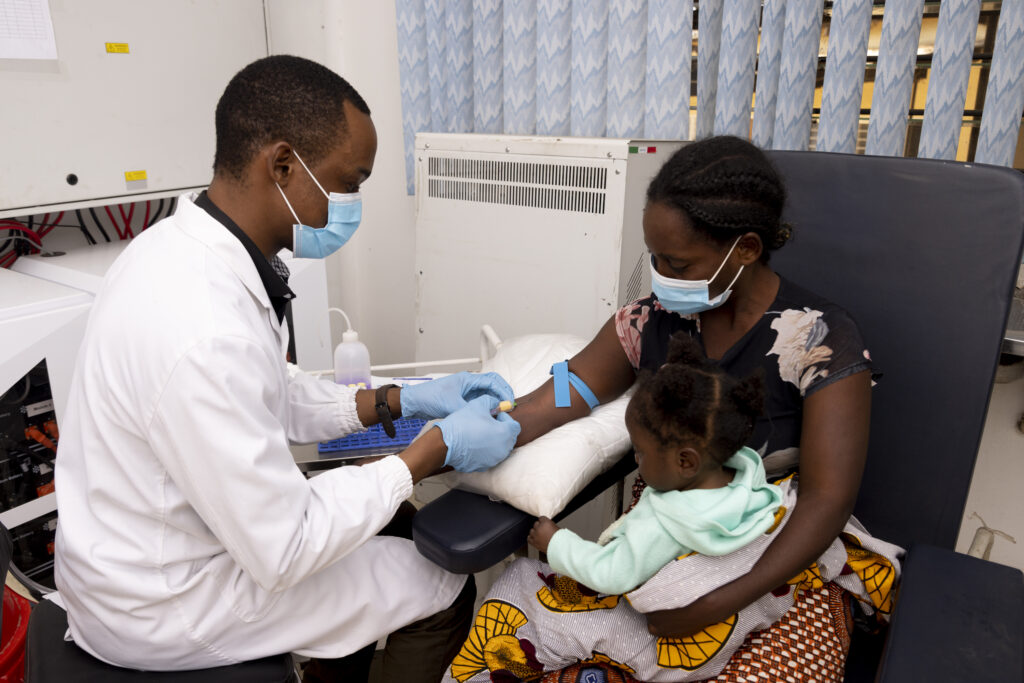
Vaccine development focused on T-cells also progressed this year. Together with our partners, IAVI began the IAVI C114 clinical study, which is testing a very promising T-cell immunogen that could help contribute to a preventive HIV vaccine. The results of the University of Oxford T-cell program published earlier this year were also very encouraging, supporting the safety and immunogenicity of the candidate vaccine regimen under investigation.
It’s because of these excellent results and new clinical trials that Mark Feinberg, IAVI’s President and CEO, describes “this moment as the most promising ever for HIV vaccine research.” To recognize the challenges, resilient adaptations, and successes of this year, we interviewed five IAVI leaders for their perspectives on what changed in 2025 and what is to come. For their reflections, you can read more in our series of posts on LinkedIn.
We were pleased to also recently launch a new advocacy engagement series with the International AIDS Society that seeks to mobilize global and regional stakeholders to help secure sustainable, diversified investment and political commitment for African-led HIV vaccine research and development (R&D). You can watch the first webinar in the series held on November 11, 2025 on African leadership in HIV vaccine R&D in an era of shifting global priorities.
In support of this effort, we are also releasing a new advocacy brief outlining what we are set to gain through sustained investments in HIV vaccine research. From conducting faster, smarter, and inclusive research, to strengthening regional vaccine research and manufacturing capacities, investments in HIV vaccine R&D represent a strategic opportunity to advance the HIV prevention field and broader vaccine development ecosystems. You can read the full brief here.
Despite all of the challenges and changes of this year, our work, to create innovative new tools to prevent HIV, must continue. Like our colleagues and friends at the International AIDS Society have said, this World AIDS Day we must rethink, rebuild, and rise. We will continue to persevere, and do so from a stronger scientific standing than ever.